

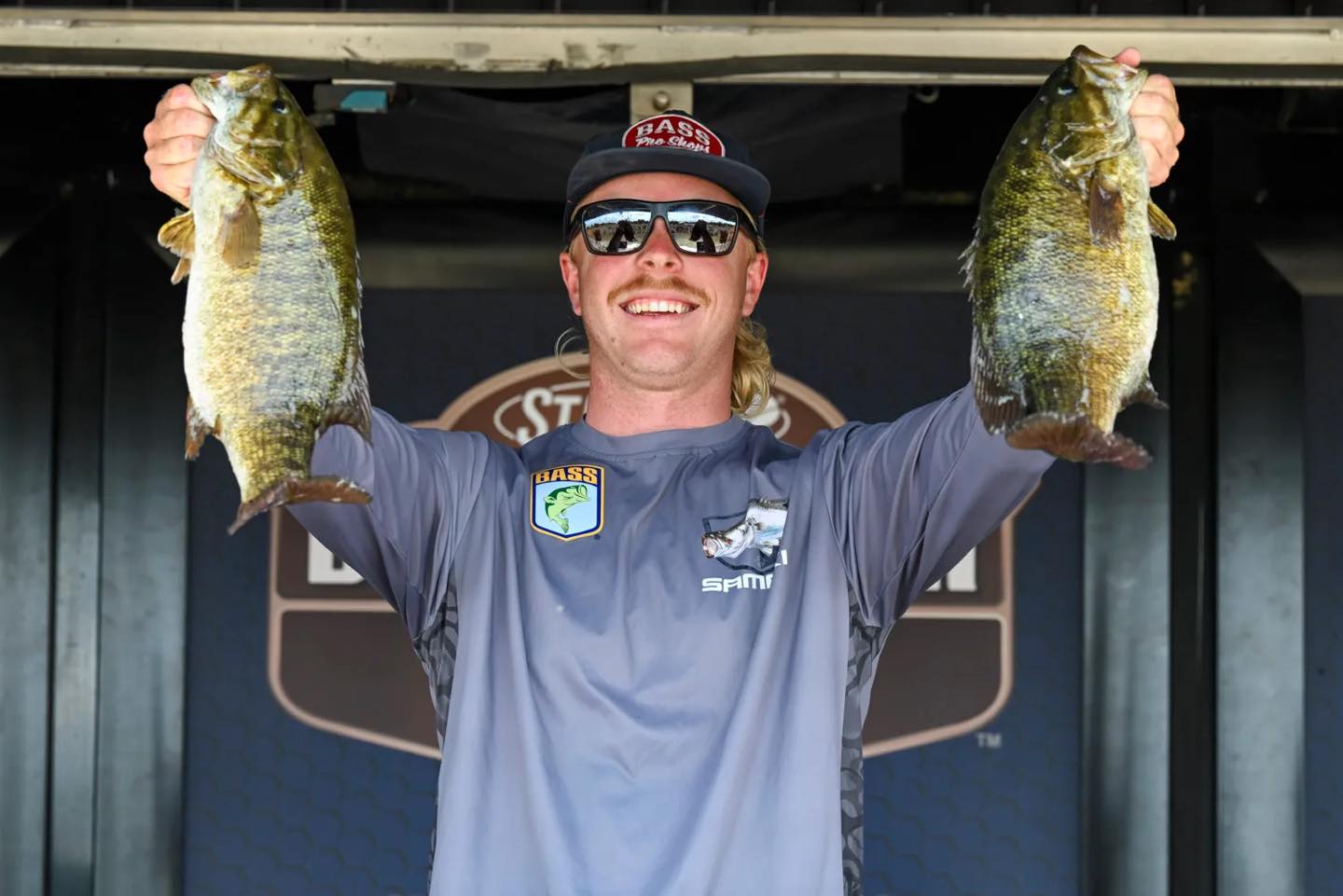
When I look back at my time fishing the St. Lawrence River for the Bassmaster Open, it feels like one of those moments that’ll stick with me forever. It was one of the hardest weeks I’ve ever had on the water but it was also one of the most rewarding. Finishing in 16th place and locking in my spot for the EQs wasn’t just about numbers on a scoreboard – it was proof that all the sacrifices, the long flights, the money spent, and the hours of practice were worth it.
Getting There
We kicked things off in Waddington – a little riverside town that felt about as far away from home as you can imagine. From Waddington, it takes about an hour and a half to run the boat all the way to the mouth of Lake Ontario. That’s where a lot of the guys were heading, because everyone knows there are giants living out there. But the run itself eats up so much time. By the time you get there, you’ve only got about four hours to fish before you’ve got to refuel and start the trek back. It’s a huge gamble. Unless you’ve got something really special found in practice, it’s hard to justify burning all those hours.
Me, I never really found anything worth that long run. Every time I poked my nose up there in practice, it was packed with boats, and the fish acted smart – like they’d already seen every lure in the shop. You’d look at the graph, and sure enough, you could see them stacked on those obvious little humps and rises. The problem was, everyone else could see them too. The more obvious a spot looked, the more boats there’d be parked on it. I didn’t want to play that game.
Early Signs
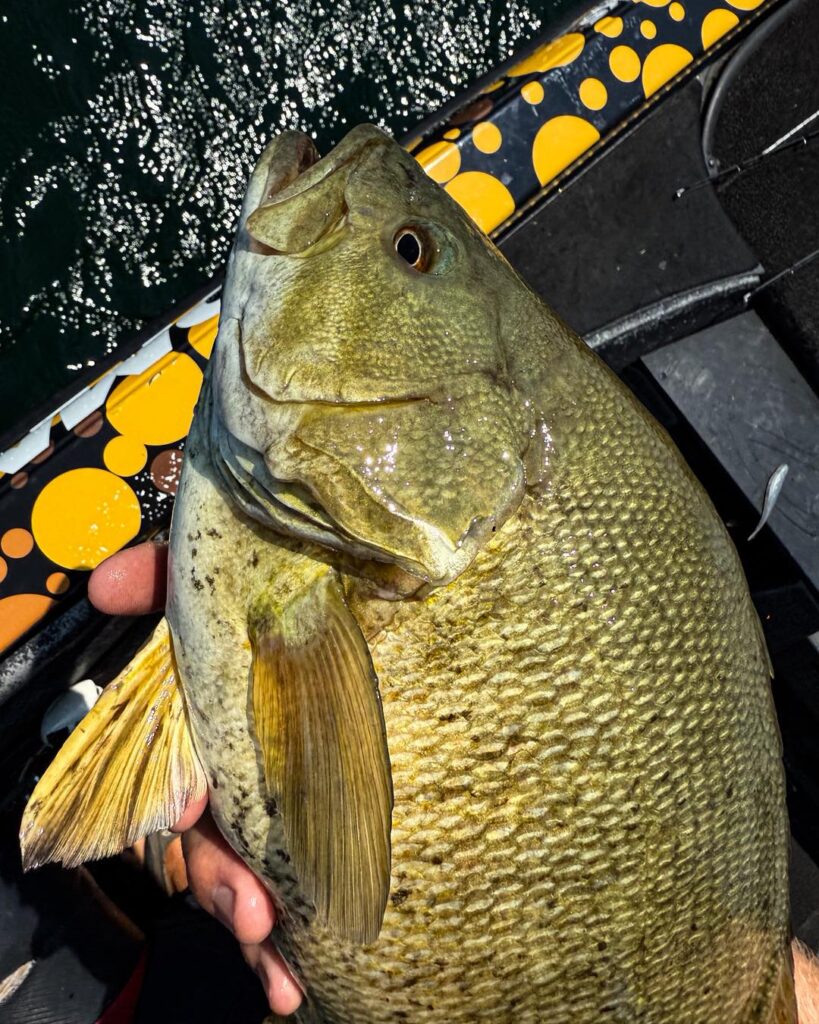
I did manage to catch a couple of solid fish in practice that gave me hope. One went about five pounds three ounces, the other around five even. Both of them came shallow along the edge, and that was enough for me to think, “Okay, there’s definitely quality here.” I figured if I could string a few of those together during the event, I’d be in good shape.
Heading into the tournament, I was sitting around 61st place in the EQ standings for Division 1. To qualify, I needed to push into the top fifty. That meant I couldn’t just play it safe. I had to swing. My mindset was pretty simple: go all-in on the best water I’d found, fish hard, and let the cards fall where they may.
A Helping Hand
One of the cool parts of this journey was having my mate Byron fishing alongside me. He’s another Aussie, and having someone from back home around really helped when things got tough. Byron had found a bite in shallow water, near the dam that leads into Lake Ontario. He was catching them in less than a metre of water on little baits. That gave me the idea to try and replicate it elsewhere.
I started exploring shallower areas with grass beds, and sure enough, I found a few fish willing to eat. It wasn’t the jackpot, but it gave me another option. More importantly, it gave me confidence. Sometimes that’s half the battle.
Gear That Made the Difference
Gear played a massive part in this story. For my jerkbait fishing, I was using a prototype Samaki 6’11” rod – medium action, moderate-fast. My mate Josh (who runs Samaki back in Australia with his wife Kate) designed it, and honestly, it’s the best jerkbait rod I’ve ever put my hands on. Light, whippy enough to work the bait properly, but still strong enough to keep fish pinned. Paired with a Megabass Vision 110 in shallow water, it was dynamite in practice.
Line choice was key too. Normally I’d run 12- or 14-pound, but this time I dropped down to 10-pound fluoro. In that super clear water, and with those acrobatic smallmouth jumping all over the place, the stretch of lighter line helped me land more fish. In practice I caught a stack of three-pounders and thought I’d found something solid.
But come tournament time, it fizzled. I caught two keepers on day one with the jerkbait and then had to abandon it. That’s tournament fishing for you – what works one day doesn’t always hold up when it counts.
So I switched to my other main approach: finesse fishing. That meant dropshots and small jigs. For the dropshot, I leaned on the Samaki Zing Extreme Spin Light, a 7-foot fast spinning rod that feels like an extension of your arm. Paired with X-Braid Upgrade in 16-pound, dropping down to a super thin 8-pound leader, it gave me the perfect mix of strength and finesse. That thinner diameter leader was a game-changer – I swear it got me more bites in that gin-clear water.
The business end was simple but deadly: a Berkley MaxScent Flatworm on a quarter-ounce weight. Every smallmouth on the planet eats that thing.
Then there was the finesse jig. I had a few Beast Coast Custom jigs, only a quarter-ounce, tipped with MaxScent trailers. For whatever reason, those smallmouth couldn’t resist when they were in the mood. I’d pitch them onto little rock patches, watch on LiveScope how the fish reacted, and then change colours until one of them snapped. Green pumpkin was the first choice, but if they ignored it, I’d switch to black, then back again. It was a constant guessing game, but when you cracked the code, it was magic.
The Grind
Tournament days are always a blur. Early mornings, long boat rides, hours of casting and retying, and the constant stress of wondering if you’re doing the right thing. At St. Lawrence, it felt even more intense. The river is so big, the fish so spread out, and the competition so fierce.
There were stretches where I felt like I was wasting my time, staring at the screen, seeing fish follow my bait and then turn away. That’s enough to mess with your head. But I kept grinding. Kept switching baits. Kept telling myself the next cast could change everything.
And eventually, it did.
The Breakthrough
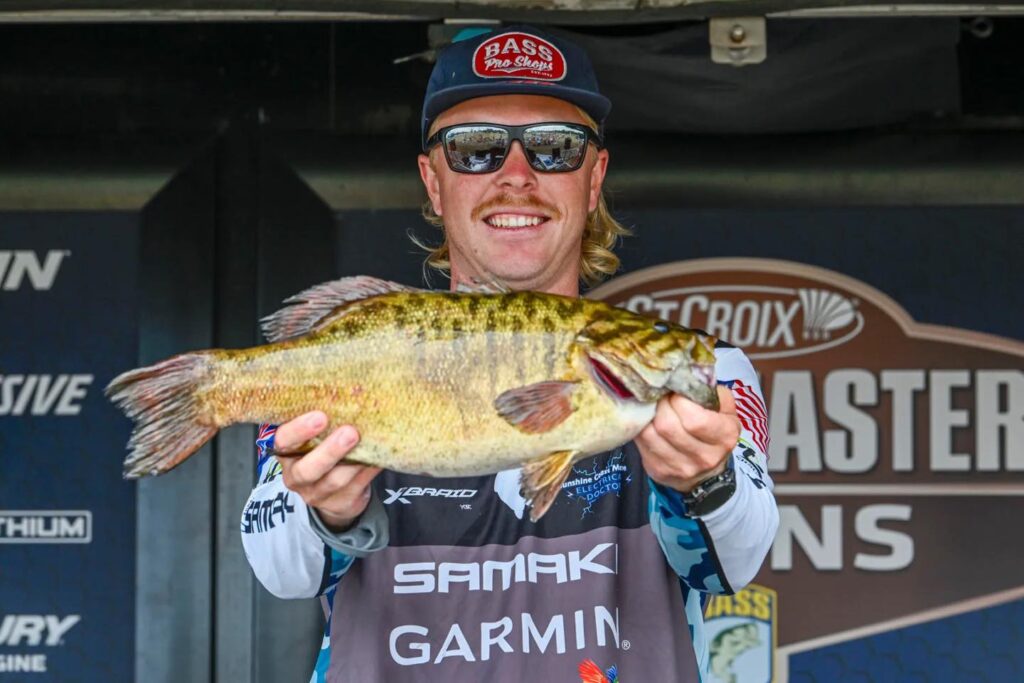
I’ll never forget the feeling of hooking into a big one on the finesse jig. Watching it on the screen, seeing it follow, giving the bait one last little hop, and then – thump. The rod doubled over, the fish went airborne, and I knew straight away it was the kind you need in a tournament like this. Over four pounds, easy.
That fish anchored one of the heaviest bags I’ve ever put together. Twenty-four pounds. It’s the kind of weight you dream about, the kind that keeps you in the hunt against the best in the world. Without that jig bite, there’s no way I would’ve cracked the top twenty.
The Finish
When it was all said and done, I ended up in 16th place. To some people, that might not sound like much. But for me, it meant everything. It punched my ticket to the EQs, kept the dream alive, and proved I could hang with some of the best anglers on the planet.
Standing there at weigh-in, hearing the announcer call my name, watching those smallmouth hit the scales – it’s hard to put into words. Pride, relief, exhaustion – it was all there.
Looking Back
The St. Lawrence event taught me a lot. It taught me the importance of adapting, of not being stubborn when things don’t work out. It taught me that sometimes the smallest details – like leader diameter or jig colour – can make the biggest difference. And it reminded me that no matter how tough things get, if you keep grinding, good things can happen.
Now, with the EQs ahead, I’m more motivated than ever. The St. Lawrence was a chapter I’ll never forget – one where a young Aussie battler went toe-to-toe with the best, held his own, and walked away knowing he belonged.
Leave a Reply